Talk about work you actually do
Your services and business information give the posts a purpose. Keep the message relevant to someone who might need your trade.

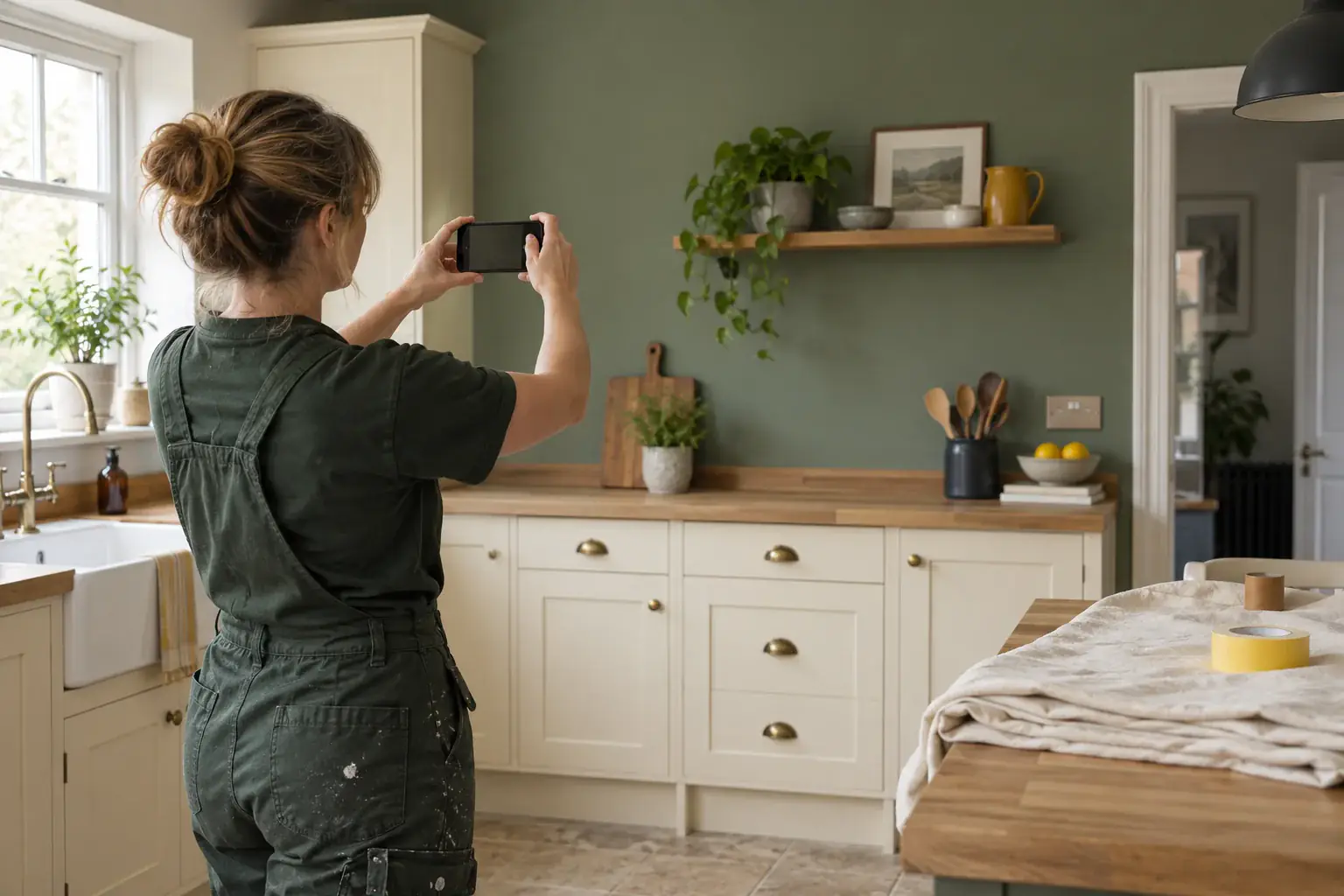
Social media posting · Part of Done For You, £297/month
You’re busy doing the work. We turn your job photos, services and website content into regular social posts, so anyone checking you out sees a business that is active, local and proud of its work. Below: what to post, a weekly plan, photo tips and which platforms suit trades.
Business-in-a-Box + your own marketing team. Everything in Business-in-a-Box, plus we run this for you every month. No setup fee. No contract.
WHY THIS PART MATTERS
A recommendation often leads to a quick look at your profile. Show people the services you offer and the business behind the name, without spending your evenings wondering what to post.
Your services and business information give the posts a purpose. Keep the message relevant to someone who might need your trade.
Website copy, business details and usable job photos provide a starting point. You don’t have to become a full-time content creator.
A post can point to a service page or contact route. Someone who wants to know more should know where to go.
TRADE BUSINESS SOCIAL MEDIA POSTS
Every post should show your work, show your knowledge or show the people behind the business. If it does none of those, skip it. These nine post types suit almost any trade, with a note on what to write.
One clear photo of completed work, the town (not the street) and a sentence on what the customer needed. “New consumer unit fitted in Leyland after the old fuse box failed its EICR” beats “another happy customer”.
Two photos from the same spot. It is the clearest way to show what changes when someone hires you. See the photo guide below.
The stage customers rarely see: first fix, felt and battens before the tiles, the sub-base before the slabs. It shows the work that sits under the finish.
A corroded fitting, cracked flashing or scorched socket. Explain the cause and what you did, without naming the customer or criticising the previous installer.
Something a homeowner can safely do: bleeding a radiator, finding the stopcock, checking gutters from the ground. Useful posts get saved and shared.
Why two quotes for the same job differ: materials, access, preparation, waste removal, certification. It answers a question customers are often too polite to ask.
Share a Google review with the customer’s first name only and link to your profile. Our review requests make these easier to collect.
Who turns up, how long they have been in the trade and what they are qualified to do. People are letting you into their home; a friendly face helps.
Boiler servicing before winter, gutter clearing after leaf fall, a gap in the diary next week. Keep these occasional so the feed stays useful rather than salesy.
SOCIAL MEDIA MARKETING FOR TRADES
Three posts a week is plenty for most local trade businesses, and one good post a week beats a burst of activity followed by six months of silence. Consistency matters more than volume. This plan takes well under an hour a week once taking photos on site becomes a habit.
Batch it if that suits you better: pick three photos on a Sunday evening and schedule the week in Meta Business Suite, which can publish to a Facebook Page and an Instagram account together. Write captions the way you would explain the job to a neighbour: what was wrong, what you did and roughly where it was.
If you have a Google Business Profile, add the best photo there too. It sits next to your reviews and map listing, where customers are already deciding who to call.
| When | What to post | Example | Time |
|---|---|---|---|
| Monday | Last week’s best finished job | Three photos of a completed bathroom, the town and the main problem solved | 10 min |
| Wednesday | A tip, a problem you found or what affects the price | “Why we replaced this cylinder rather than repairing it” | 10 min |
| Friday | Before and after, or a short work-in-progress video | Side-by-side driveway photos, or a 15-second clip of the finish going on | 10 min |
| Every day | Reply to comments and messages; check local groups | Answer “do you cover Chorley?” the same day | 5 min |
| Once a month | A review, a seasonal reminder or a team post | A Google review shared with the customer’s permission | 10 min |
SOCIAL MEDIA FOR TRADES, TRADE BY TRADE
The best posts come from work only your trade sees. Here are starting points for the trades we build for, each linked to what that trade’s website should include, so your posts have somewhere relevant to send people.
A tidied boiler cupboard before and after, a bathroom from strip-out to tiles, a scaled-up shower valve with a hard water tip. See websites for plumbers.
A new consumer unit with clear labelling, an EV charger install with the cable route explained, a scorched socket and why it happened. Avoid anything that encourages unsafe DIY. See websites for electricians.
A re-roof in stages, a slipped tile repair, gutters before and after clearing, and a reminder to check ridge tiles after a storm. Only take photos from a safe position. See websites for roofers.
Weekly progress on an extension from footings to roof, the steel going in, then the final reveal. A slow series keeps people following a project. See websites for builders.
Before and after from the same corner of the garden, the patio sub-base and drainage, then the planting again a season later. See websites for landscapers.
The preparation: filling, sanding and masking. Then the finished room in daylight, with the paint colour named so customers can look it up. See websites for painters and decorators.
A system flush with the dirty water to show why it was needed, a smart thermostat set-up, and service reminders ahead of winter. See websites for heating engineers.
Oven, carpet and end-of-tenancy before and afters, the kit you use and exactly what a deep clean includes. See websites for cleaning companies.
A new composite door, replacement windows from inside and out, and condensation between panes explained. See websites for window companies.
Calm, non-graphic posts: proofing at entry points, wasp nest season reminders and the signs of mice to look for. Keep addresses well out of shot. See websites for pest control.
BEFORE AND AFTER PHOTOS
Before-and-after posts are among the most useful things a trade can share, and they are easy to get wrong. A blurry after shot from a different angle undoes the comparison. Thirty seconds of care at the start and end of a job fixes it.
FACEBOOK GROUPS VS INSTAGRAM VS TIKTOK VS NEXTDOOR
You do not need to be everywhere. Most UK trade businesses are best served by a Facebook Page plus a Google Business Profile, with Instagram added for visual work. Here is how the main options compare.
If you only have time for one, choose the place your customers already ask for recommendations. In many towns that is still the local Facebook group. Join the main groups covering your area, reply helpfully when your trade comes up, and let your Page and website do the selling.
| Platform | Best for | What works | Watch out for |
|---|---|---|---|
| Facebook Page | Almost every domestic trade | Finished jobs, before and afters and reviews, for customers checking you out after a recommendation | Organic reach for Pages is limited. Treat it as a shop window rather than a steady source of enquiries |
| Facebook groups | Being recommended locally | Answering “can anyone recommend…” posts, helpful replies, showing a relevant job where the group allows it | Read each group’s rules first. Many only allow business posts on set days, and spamming gets you removed |
| Visual trades: landscaping, bathrooms, kitchens, decorating, joinery | Reels of the finish, carousels of before and afters, project series | Needs regular, good-looking photos. Less useful for emergency and repair work | |
| TikTok | Trades happy on camera | Satisfying process clips, honest explainers, a day on site | Viewers are often spread across the country, not your area. Only worth it if you will keep making video |
| Nextdoor | Neighbourhood word of mouth | A free business page and neighbours recommending you in local threads | Activity varies a lot by area. Check whether your towns are active before spending time there |
| Google Business Profile | Customers ready to book | Photos and updates beside your reviews and map listing | Not a social network, but often the most valuable place for a job photo |
| Commercial work | Reaching contractors, letting agents and facilities managers | Little value for domestic customers |
SOCIAL MEDIA MANAGEMENT FOR TRADESMEN
There are four realistic ways to run social media for a trade business. The right one depends on your time, and on whether you want regular posting, paid adverts or both.
Whichever route you choose, posts should lead somewhere useful. A post or advert that sends people to a page without your services, coverage or a working quote form wastes their interest. And when someone does message you, a reply needs to reach them while they are still deciding: see lead follow-up.
Costs nothing but time and works if you are disciplined about photos and enjoy writing captions. It is usually the first thing to slip when the diary gets busy.
Flexible and personal, but it depends on one person’s availability. Agree who owns the accounts and passwords from day one.
Useful if you want Facebook or Instagram adverts. Ask who owns the ad account, what the management fee is on top of ad spend, where enquiries go and who follows them up.
Posting about your jobs on social media and Google is part of Done For You at £297/month, alongside ongoing website SEO, a monthly review push and everything in Business-in-a-Box. We agree channels and routine during setup. Paid advertising is not included.
WHAT TO AVOID
Customers judge a profile quickly. These are the common things that make a capable business look closed, careless or hard to reach.
A PRACTICAL WAY TO USE IT
Agree your services, tone and the accounts we can connect.
We draw on your website and marketing content to prepare relevant updates.
Interested readers get a route to the service information or enquiry page.
Part of Done For You, £297/month.Everything in Business-in-a-Box, plus every month we post your jobs, work on your website’s SEO, run a review push, text past customers when it’s quiet, manage your invoicing and send you a short update.
Compare the two plansREAL WORK YOU CAN LOOK AT
These examples show what we built. They are not promises of rankings, enquiry numbers or future results for your business.
WE DO THE SETTING UP
We review your current setup, agree the useful changes and explain how to use the result. These are the details that help us put this part in place.
See the setup processBEFORE YOU DECIDE
Anything specific to your business? Bring it to the call and we’ll work through it.
Book a quick callTwo or three times a week is a realistic target for most local trade businesses. Regular, genuine posts matter more than frequency. If you can only manage one strong job post a week, that still keeps a profile looking active.
For most domestic trades, yes: it is where many customers check you out and where local recommendation groups live. Do not expect a Page on its own to produce a steady supply of enquiries. It works best alongside a website and a Google Business Profile.
Posting is part of Done For You at £297/month. We confirm the connected accounts and posting scope during setup. There is no set platform list or posting quota, so we make those details clear before you start.
No. Posting can use content created within your website and marketing setup. Real job photos and occasional updates are useful, but the point is to reduce the amount of content work you have to organise yourself.
No. Organic social posts give people useful information when they visit your profile or see a post. Paid adverts involve a separate campaign, audience and media budget. The posting in Done For You does not include an advertising budget or ad management; bring those requirements to the call.
Content should reflect your own services, experience and evidence. We do not invent qualifications, customer comments or completed jobs to make a feed look busy.
Look at where customers get stuck. If they check your profile but cannot tell what you do, useful service and job posts can help. If they click through but cannot find coverage, service details or a working quote route, address the website journey too. The two should connect: a post about a service needs a relevant next step.
Only with their permission. Keep house numbers, number plates, people and personal belongings out of shot, name the town rather than the street, and wait until the owner is home if the property is empty.
Fixed-price services such as a boiler service or gutter clear can carry a “from” price if it is accurate. For bespoke work, explaining what affects the price is usually more useful than a number that may not apply to the reader’s job.
BETTER WHEN THE PIECES JOIN UP
USEFUL BEFORE YOU DECIDE
START WITH A CONVERSATION
Tell Jack which social accounts you use. We’ll agree the channels, content and posting routine around your business.
15 minutes. Plain English. No pressure.Done For You £297/month · Everything in Business-in-a-Box, run for you
SOCIAL MEDIA FOR TRADESMEN IN THE UK
What social media actually does for a trade business.
Most homeowners with a burst pipe search Google, not Instagram. Social media earns its place at a different moment: when someone has been recommended your name, spots your van, or asks in a local Facebook group who to use for a new patio. They tap through to your profile to decide whether you look active, tidy and right for their job. A feed with recent, real work answers that in a few seconds of scrolling.
That makes the goal of social media for tradesmen fairly simple. Show the kind of work you want to be asked for, prove you are still trading locally, and make it easy to get from a post to a quote. You do not need viral videos, dance trends or daily posting. You need a steady record of genuine work, with a clear route to your website or phone number.
It also supports the rest of your marketing. A customer who finds you on Google Maps and then checks your Facebook page sees the same name, the same van and the same standard of work. That consistency helps a cautious customer feel comfortable getting in touch.